Trauma Therapy in Farmington Hills, MI
When the Past Won't Stay in the Past: Trauma Therapy Support in Michigan
You know, on some level, that what happened was a long time ago. But your body hasn't gotten the message.
Maybe it's the nightmares, the way certain sounds or moments send you somewhere else in the middle of an ordinary day. Or maybe it's subtler, the constant scanning, the bracing for things that haven't happened, the exhaustion of being alert in rooms that are perfectly safe. The irritability that comes out sideways, aimed at people you love, when the real target is something years gone.
You've tried to push through. You've tried to reason your way out. Maybe you've tried therapy and found it didn't reach what you were actually carrying.
You're not overreacting. You're not too much. Your responses make complete sense given what you've been through.
If this feels familiar, you're not alone.


Understanding Trauma and Why It Holds On the Way It Does
Trauma isn't just a memory. It's the way your nervous system learned to protect you during something overwhelming, and never fully got the signal that the threat had passed.
That's why trauma doesn't respond to logic or willpower. You can know you're safe, and your body can still act as though you're not. That gap, between what you know and what you feel, is where trauma lives.
Trauma therapy is designed to work inside that gap. Using specific, evidence-based approaches, it helps your nervous system process what got stuck at a pace set by you.
People come to this work for many reasons: childhood experiences that were never named, a single overwhelming event, or the cumulative weight of chronic experiences that shaped how you learned to move through the world.
Whatever brought you here, this work is possible. And it doesn't have to be as overwhelming as you might fear.
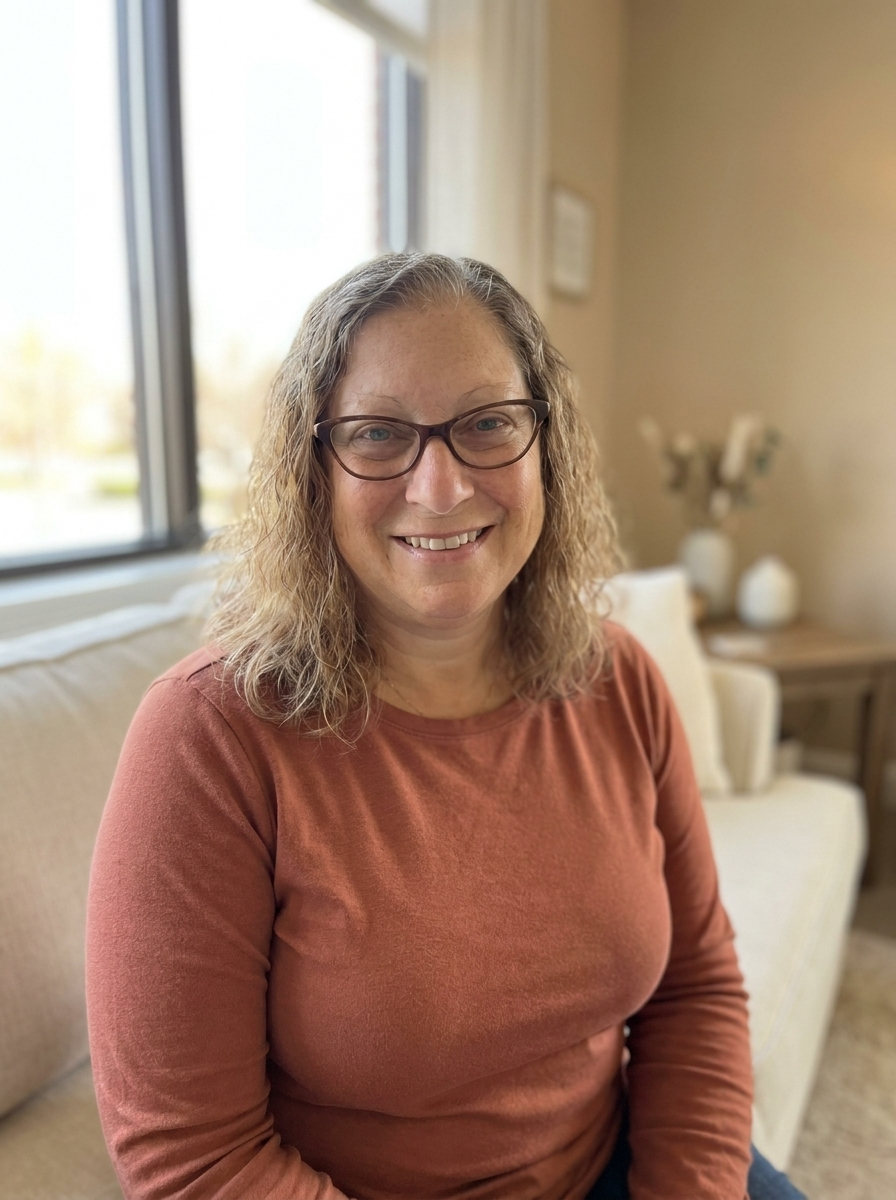
Meet Tori Noe
Licensed Master Social Worker #6801079870
I understand the quiet conviction that you're simply built differently, that others have moved on from hard things and you haven't, and that this must mean something is wrong with you.
It doesn't. It means you've been carrying something heavy without the right support to work through it.
I am trained in EMDR, Internal Family Systems (IFS), and Deep Brain Reorienting (DBR). These are specific and practiced tools that address the layers where trauma actually lives. I've worked for over 30 years across community mental health centers, correctional facilities, inpatient psychiatric settings, and private practice.
New clients often tell me they've never said what they're about to say to anyone. I won't be surprised. I won't flinch. And you don't have to have the words figured out before we begin. I will help you.
What Clients Often Notice Through Trauma Support
Trauma therapy looks different for everyone, and there are no guarantees about the shape or timeline of progress. What I can share is what many clients report, not as promises, but as possibilities.
Some notice the constant physiological bracing starting to settle. Others find that the distance between a trigger and their reaction slowly increases, space they didn't have before. Over time, many describe a quiet return to themselves, more present in their own life rather than just moving through it and replacing the negative belief about themself with a positive belief.
Quieter Nights
More Room to Breathe
Coming Back to Yourself
Rediscover Yourself Today
Change can feel uncertain, but it can also be meaningful. Let’s work together to navigate this next chapter with clarity and compassion.
The Trauma Therapy Process
Healing from trauma is a process of reclaiming your own body and your present moment. While every person's path is unique, these are some of the gentle shifts clients may start to feel.
Strong Foundation & Client-Led Pace
Early sessions focus on building trust, understanding your history, and creating stability, with you setting the pace based on what feels manageable.
Supported, Not Alone in the Work
Whether using EMDR, IFS, or DBR, you’re guided throughout the process, with continuous support as deeper material is explored.
Ongoing Support Beyond Sessions
Virtual sessions offer comfort and control in your own space, along with practical tools and reflections to continue the work between sessions.
A Different Relationship With Your Past and Your Present
You don't have to be defined by what happened to you. That's not a promise, it's a direction of travel that becomes possible with the right support.
Clients who stay with this work often describe a shift that's hard to name at first. The past starts to feel less like something that is still happening and more like something that happened, a distinction that sounds small and changes everything.
Sleep may begin to settle. Relationships may feel more navigable. The part of you that's been on guard since childhood may slowly begin to trust that the danger has passed.
None of this happens all at once. But many clients reach a point where they realize they're actually in their life. Present. Breathing. Okay.
That's what this work is for.

Beginning Trauma Therapy in Michigan What the First Step Looks Like
You have been through enough. The process of getting help should be clear, safe, and straightforward. Here is what you can expect when you reach out.
1.
Reach Out
Fill out the contact form or send a message. You don't need to explain everything in that first message just a few words about where you are is enough. You'll hear back within one business day.
2.
Free Consultation Call
We spend 15 to 20 minutes talking. No pressure, no commitment. You ask what you need to ask. I get a sense of where you are and whether this feels like the right fit for both of us.
3.
Begin, at Your Pace
If we decide to work together, we schedule your first full session. From there, we go at whatever speed makes the work possible for you. There is no rush.

Reflections From People Who've Done This Work
Trauma therapy tends to surface things clients didn't expect to find and to resolve things they had stopped believing could change. Here's what people often share over the course of this work:
- Many clients realize their responses weren't signs of weakness; they were the most logical thing possible given what they lived through
- Clients often tell me that talking about something they'd carried alone for decades felt different than they feared, less catastrophic, more relieving
- People sometimes realize that the irritability, the disconnection, or the numbness wasn't a character flaw; it was a survival response they never got the chance to set down
- Many notice that the body starts to feel less like an enemy and more like something that was doing its best
- Clients often say, at some point in the work, that they feel more like themselves than they have in years sometimes more than they ever remember feeling
Frequently Asked Questions About Trauma Therapy
It is completely normal and wise to have questions before beginning this deeply personal work. Here are my honest answers to some of them.
Do I have to describe what happened in detail?
No. You don't have to relive events in explicit detail for this work to be effective. Some of the most powerful trauma approaches, including EMDR and Deep Brain Reorienting, work at the level of the nervous system rather than the narrative. You share what you're comfortable sharing, and we build from there.
How long does trauma therapy take?
That varies significantly depending on the nature of what you're working through, your history, and how your system responds to the work. Some people notice meaningful shifts in a few months. Others engage in longer-term work. I'll always be honest with you about where we are and what I'm noticing.
Is virtual therapy effective for trauma?
Yes, for many people, particularly for trauma work. Being in your own environment can reduce some of the activation that comes with entering an unfamiliar space. Virtual sessions also remove the logistical barriers that can make consistent attendance difficult. All sessions are conducted through a HIPAA-compliant platform.
What if I've tried trauma therapy before and it didn't help?
This is one of the most common things I hear. Prior therapy not working is not evidence that you can't be helped, it's often a question of fit, approach, and timing. I'm happy to talk through what you've tried before and what felt missing. That conversation is part of the free consultation.
How often would we meet?
Most clients start with weekly sessions. As the work progresses and stability increases, some people shift to every other week. We'll figure out the right rhythm together based on what you need and what's sustainable.
You Don't Have to Keep Carrying This Alone Start With a Conversation
Reaching out when you've been hurt before takes something. I don't take that lightly. If you're considering this, even cautiously and skeptically, I'd welcome the chance to talk. The free consultation is just a conversation. No paperwork, no commitment, no pressure to have the right words. When you're ready, I'm here.